
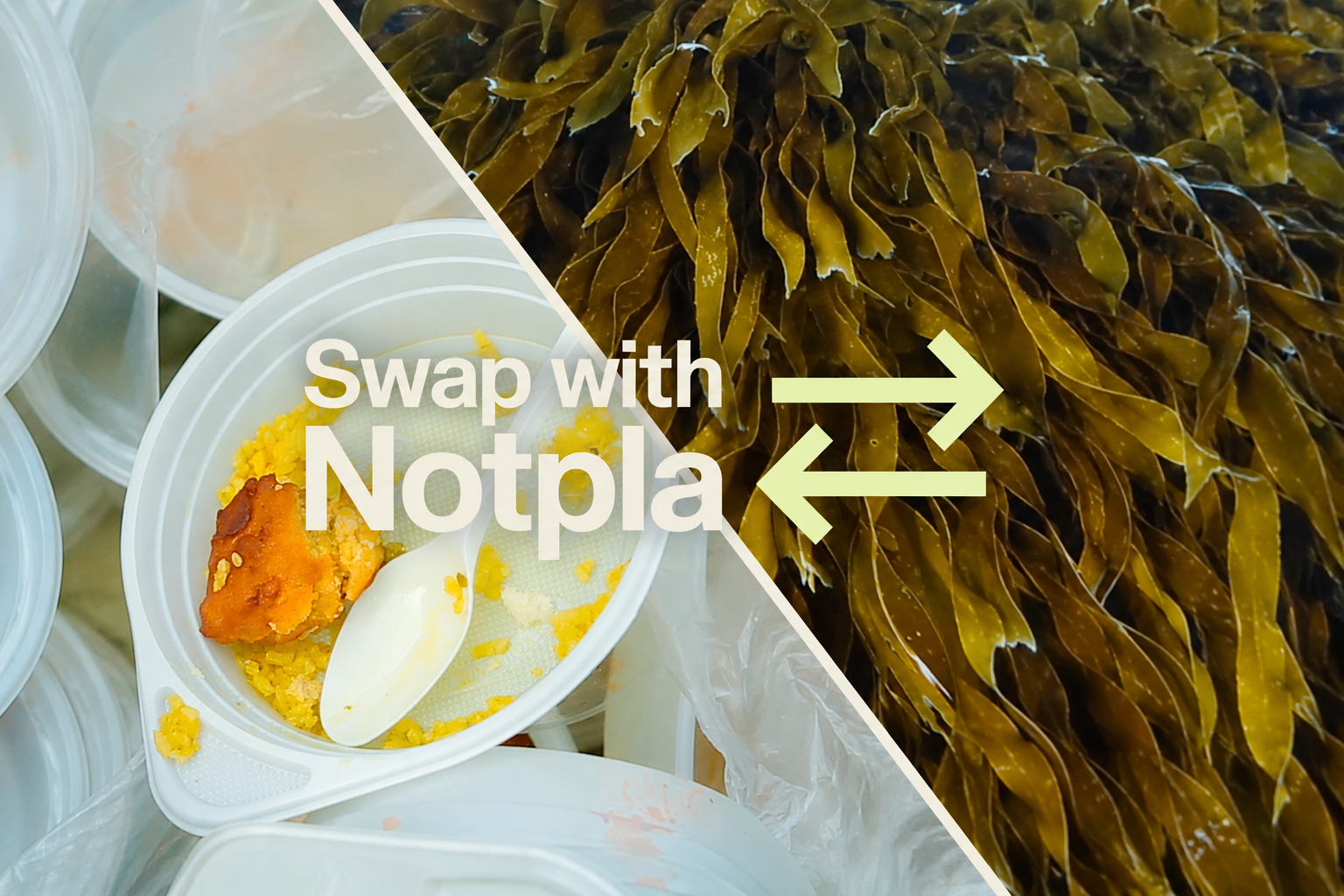
Swap with Notpla started with a simple question: What should food actually be served in?
For decades, plastic has become the default material surrounding almost everything we eat and drink. Takeaway containers, coffee cup lids, cutlery, sauce sachets and delivery packaging has slowly embedded itself into everyday life until most of us barely notice it anymore.
The focus for years has largely been on what happens afterwards: recycling systems, waste collection and plastic pollution.
But increasingly, the conversation is beginning to shift upstream.
People are starting to ask bigger questions about the materials themselves. What they are made from, how they behave around our food and whether products designed to exist for minutes should really persist in the environment for centuries afterwards.
That shift sits at the heart of Swap with Notpla, an ongoing series exploring the material changes already beginning to happen across foodservice, hospitality and everyday life.
Not through perfectionism or impossible lifestyle changes, but through practical swaps that rethink the role plastic plays around food altogether.
Plastic transformed modern food systems. It made packaging lightweight, durable, cheap to produce and easy to scale globally. In many ways, it became invisible through familiarity.
Now, that familiarity is starting to be questioned.
As awareness around microplastics and food contact materials continues to grow, consumers and businesses alike are beginning to look more closely at the materials surrounding food every day.
The lining inside a takeaway box.
The coating on a coffee cup.
The spoon used for a few minutes before being thrown away.
At the same time, research into synthetic materials and their long-term impact continues to evolve, pushing the conversation beyond waste alone and into wider discussions around human health, material design and environmental persistence.
That does not mean every person or business suddenly has all the answers. But it does mean the conversation around packaging is becoming more thoughtful, more informed and far more connected to daily life than ever before.
And increasingly, businesses are recognising that packaging decisions are no longer just operational choices. They are material choices too.
.jpg)
One of the core ideas behind Swap with Notpla is that sustainability conversations often become trapped at the end of the process.
How do we dispose of plastic better?
How do we recycle more efficiently?
How do we clean up the waste already created?
These are important questions, but they also leave a much bigger one sitting underneath them:
What if some of these materials were designed differently in the first place?
That shift, from managing plastic waste to actively replacing plastic at source, is becoming one of the most important conversations shaping the future of packaging.
Across hospitality, catering and foodservice, businesses are beginning to explore alternatives that work within real operational environments while reducing reliance on traditional single-use plastic formats. Independent food brands are rethinking customer experience through material choices. Stadiums and large-scale venues are beginning to replace millions of single-use plastic items through redesigned systems and materials.
The future of packaging is no longer a purely theoretical conversation happening inside laboratories or sustainability reports.
It is already beginning to show up in the real world.
At Notpla, we’ve spent years exploring materials designed to work more closely with nature rather than against it.
That thinking led us to seaweed.
Seaweed grows rapidly, requires no freshwater or fertiliser, and can be cultivated alongside healthy marine ecosystems. More importantly, it opens up entirely new ways of thinking about packaging design and material behaviour.
Rather than asking how plastic can be disposed of more effectively, we became interested in whether different materials could perform the same function without leaving the same long-term legacy behind.
Today, Notpla’s seaweed-based materials are already being used across hospitality, workplace catering, events and foodservice environments, helping replace millions of single-use plastic items.
But Swap with Notpla is not really about presenting one perfect solution.
It is about exploring a broader transition already underway, one where businesses, designers, operators and consumers are all beginning to question the materials surrounding food and the role those materials play in everyday life.
One of the most interesting things happening right now is that sustainability is becoming less abstract.
People are starting to look more closely at the physical objects directly in front of them. The takeaway container. The spoon. The coffee cup lid. The delivery packaging arriving at home every evening.
Individually, these swaps may seem small. Collectively, they begin to shift expectations around what packaging should actually be.
Over the coming months, Swap with Notpla will continue exploring the people, partnerships and material innovations helping drive that shift forward. From large-scale hospitality operators and independent food businesses to designers, scientists and founders, we’ll be sharing more conversations about what happens when we begin rethinking the materials around us and what becomes possible when we redesign them instead.
Because meaningful change rarely arrives all at once.
More often, it starts with one better decision repeated at scale.
One swap at a time.
#SwapWithNotpla
.jpg) The end of plastic versus paper: Why natural materials belong in modern manufacturing
The end of plastic versus paper: Why natural materials belong in modern manufacturing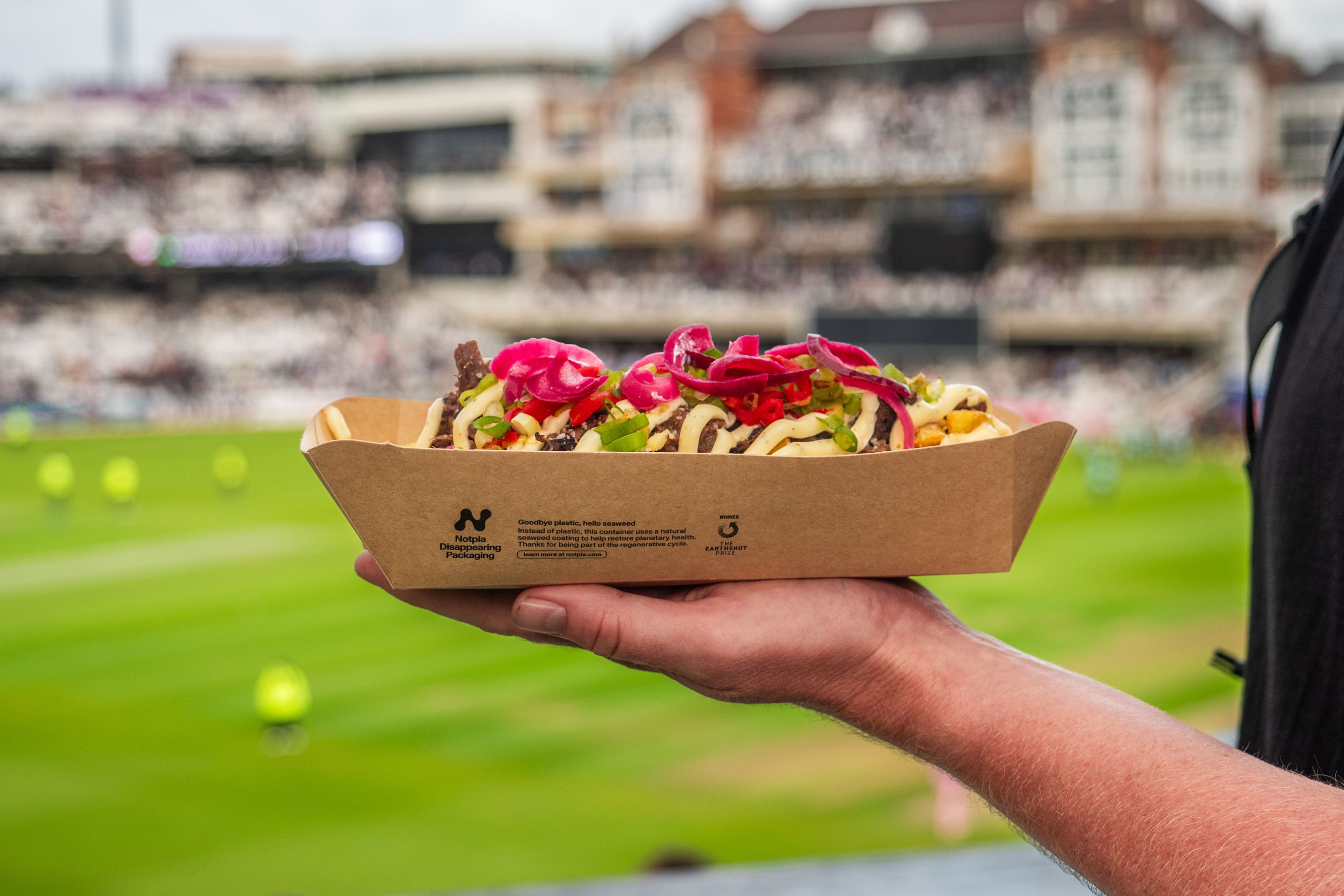 Notpla Stadium Range: building sustainable packaging into the big-game experience, at scale with Levy.
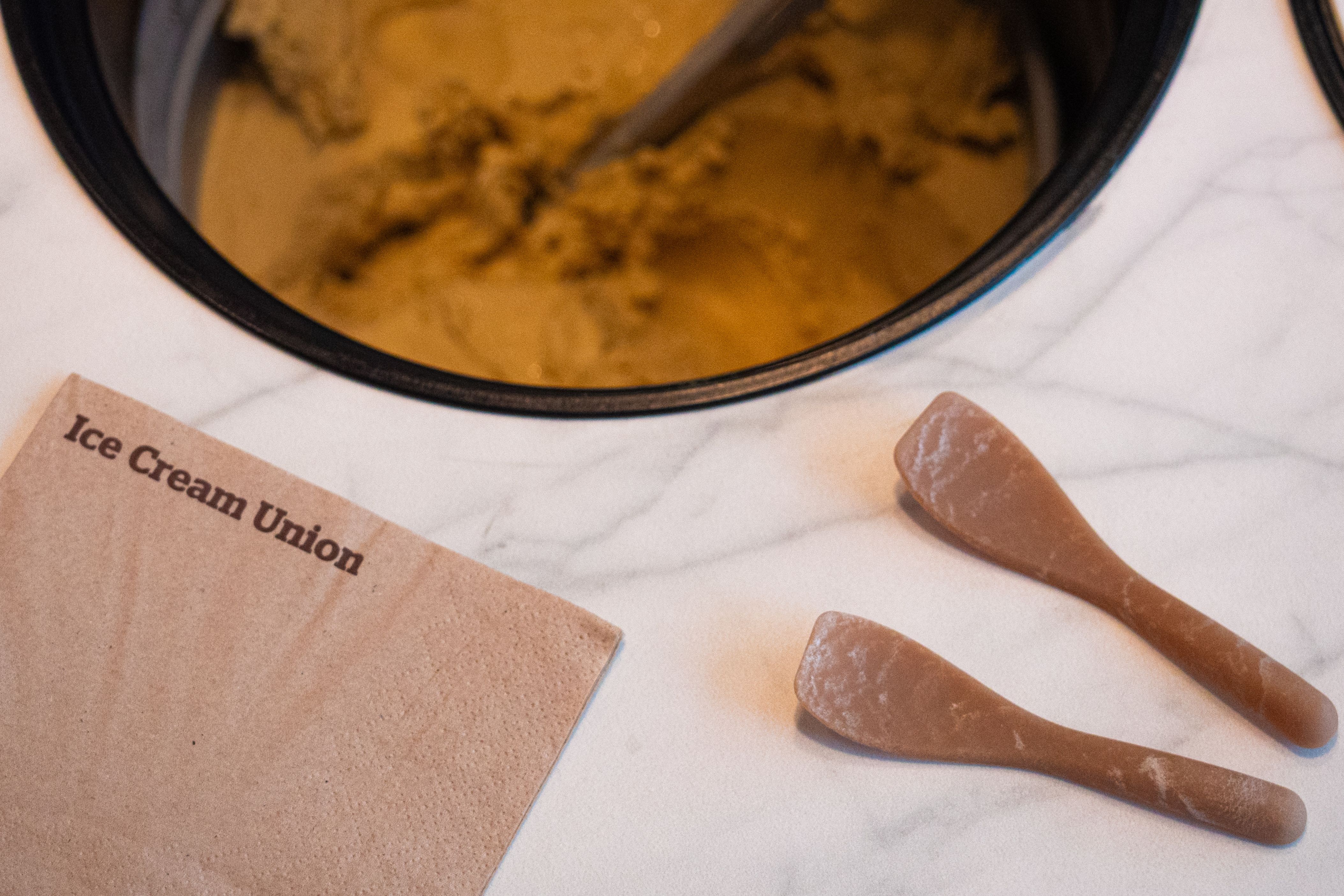 Why premium ice cream brands are switching to plastic-free spoons: Lessons from Ice Cream Union