
.avif)
As the days grow longer and the scent of street food drifts through parks, summer event season is in full swing. For food vendors and event organisers, one thing is clear: the future of takeaway food service is plastic-free.
At Notpla, we’ve always believed the natural world holds the answers to our biggest sustainability challenges. Back in 2014, we created The Ooho - an edible water bubble inspired by nature’s own packaging, made using seaweed. Since launching, Ooho’s gone on to become pretty famous - accumulating some 50 million views across social media videos. And it got us thinking - “what if there were other single-use plastics out there that we could replace with the same seaweed-based technology?”.
.jpg)
Enter takeaway food containers: one of packaging’s dirtiest secrets. Conventional takeaway containers are lined with petrol-based coatings that stick around forever, harming the planet and human health. We realised that we could replace the synthetic plastics, bioplastics and harmful toxins with a 100% natural solution, but maintain the same performance and resistance to grease.
That’s why we’ve turned to one of the ocean’s quiet heroes, seaweed, to reimagine food packaging. Our award-winning, plastic-free food containers are home-compostable, grease and water-resistant, and designed to disappear naturally. No microplastics, no faff - just nature doing its thing.
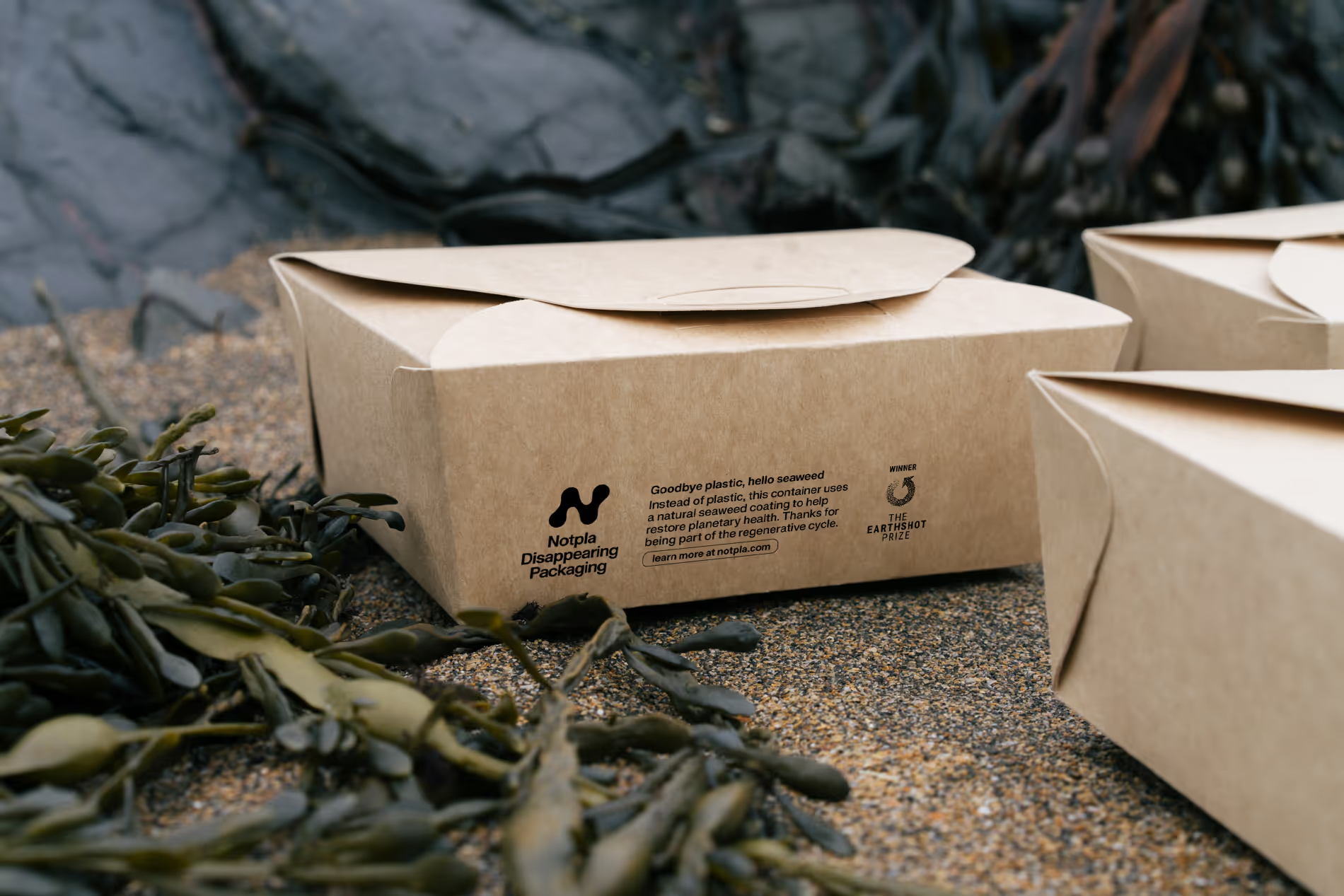
Unlike traditional takeaway packaging that can linger in landfills or oceans for centuries, our containers break down in weeks. And while they’re sturdy enough to handle your best burgers, loaded fries, or salads, they’re safe for our planet. From sandwich boxes to meal trays, we’re proving that great packaging doesn’t need plastic to perform.
This summer, we’re turning up the volume on food traders across the UK with Sustainability Legends, a new initiative celebrating the food vendors leading the way in sustainable foodservice. Whether you’ve got a stall at Glastonbury, a residency at your local market, or a string of food festivals in your diary, this is your chance to join a growing community of pioneers.
We know that small businesses are driving big change. This campaign is about recognising that power and giving it a platform to shine.
.avif)
In 2024, the EU passed new rules banning many types of single-use plastic in foodservice and the UK is following suit with stricter Extended Producer Responsibility (EPR) regulations. This is a real wake-up call.
Customers are increasingly choosing brands that align with their values, and using compostable, plastic-free packaging isn’t just good for the planet, it’s good for business. Future proofing means staying ahead of regulation, winning customer loyalty, and doing the right thing, all in one box.
Whether you're feeding crowds at street food festivals or corporate events, make your packaging part of the story - not part of the waste. Choose packaging that disappears and leaves a lasting impression.
Explore our full range of food containers
Reckon you’ve got what it takes to be a Sustainability Legend? Apply now →
.jpg) Bespoke packaging at Notpla: Meet the team behind our food packaging design process
Bespoke packaging at Notpla: Meet the team behind our food packaging design process.jpg) The end of plastic versus paper: Why natural materials belong in modern manufacturing
The end of plastic versus paper: Why natural materials belong in modern manufacturing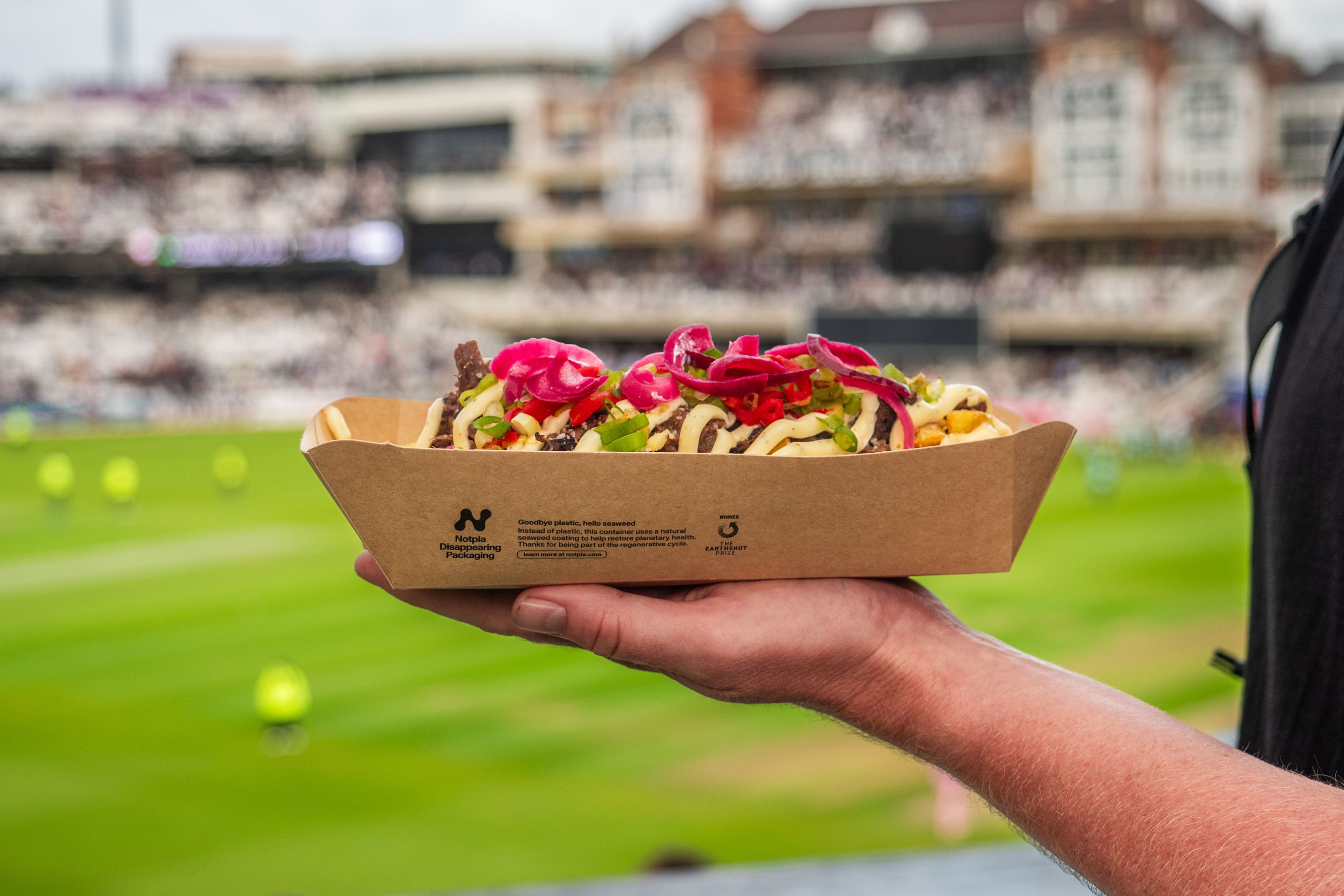 Notpla Stadium Range: building sustainable packaging into the big-game experience, at scale with Levy.