
.jpg)
This International Women’s Day, Notpla is celebrating the appointment of Karlijn Sibbel as Chief Innovation Officer (CIO), recognising her leadership in material innovation and the role she plays in shaping the future of sustainable packaging.
Karlijn has been part of Notpla’s journey for seven years, helping develop seaweed based materials that show how packaging can work with nature rather than against it. In her new role she will lead Notpla’s innovation strategy and team, guiding the development of next generation materials and scaling breakthrough solutions into real world applications.
To mark the occasion, we spoke with Karlijn about her journey at Notpla, the challenges of developing natural materials, and what the future holds.
I’ve been at Notpla for about seven years now and it’s been an incredible journey.
I first met Rodrigo and Pierre through Imperial College London where they studied Innovation Design Engineering a few years before me. My background has always been in developing new materials and exploring how natural materials can find their way into everyday products. I've worked on everything from architectural structures made from salt to batteries from mining waste to materials like mycelium, algae and bacterial cellulose, always driven by how we can rethink material systems to address urgent environmental challenges like climate change and pollution.
When I joined Notpla there were around 15 people, and our main product was Ooho. One of the first projects I worked on was mapping the seaweed supply chain and exploring how we could utilise every part of seaweed for packaging solutions. That early work led to developing Notpla Paper from the lab to large scale production.
What drew me to Notpla was the mission of making single-use plastic packaging disappear by looking at nature as our North Star. And not just replacing plastic, but doing this in a way that is exciting and makes people smile. It’s incredible to think that those early experiments happening when I joined have now turned into replacing more than 35 million single-use plastic items.

It’s both a huge honour and a responsibility.
For me the role is about continuing to push the boundaries of what is possible with uncompromisingly natural materials while making sure our ideas translate into products that can work at scale.
Many of the challenges we’re tackling are genuinely complex. Take the coffee cup for example. It requires strong water barriers and heat resistance, which is difficult to achieve with natural materials without making modifications because most of nature’s materials love to interact with water.
On the other hand, nature has had billions of years to retain or resist water and still naturally biodegrade, so a lot of our work is about studying those natural systems and applying that knowledge to material science and engineering.
Without a doubt, solving the coffee cup challenge.
Takeaway paper coffee cups contain a plastic lining or chemicals in the paper that keep liquids inside, but make them extremely difficult to recycle. That lining also sits in direct contact with hot beverages, risking the leaching of plastics and chemicals into our drinks.
Globally, we use hundreds of billions of coffee cups every year, so the scale of the challenge is enormous.
Creating a natural material that can replicate that performance is technically very difficult. But through the Horizon Europe programme we’ve secured €4 million in funding to work with partners across the value chain to develop an uncompromisingly natural solution to this challenge.

I think we're at a genuinely critical moment, and a real opportunity to fundamentally change our relationship with materials. For decades, materials were optimised for convenience and durability, even for things used for only a few minutes. Nobody was designing with the end in mind, and the consequences of that are now impossible to ignore.
Plastic pollution is found everywhere, from Mount Everest to the deepest oceans and increasingly within our bodies. As plastics break down, they create microplastics and nanoplastics that move through ecosystems and food chains. We are only at the start of fully understanding the broader impacts of this on human and planetary health.
That’s why we need to design materials with the end in mind and integrate regenerative practices. Materials that perform well during use but can safely return to natural systems afterwards, and ideally leave them better than they found them.
Women are still underrepresented in science, engineering and innovation overall. It's important to have role models to look up to in your field. But beyond that, diverse perspectives and experiences are essential to solving the complex problems we're facing - and those problems can only be solved well if the people solving them better reflect the diversity of the world they're designing for. One thing I’m particularly proud of at Notpla is the diversity and drive of our team. Around 70 percent of our innovation team is female, for example, which is quite rare in R&D environments.
In my career, I’ve regularly found myself the only woman speaking at a conference, in a factory visit or technical discussion. At Notpla, we have so many talented women with a strong representation across science, design, engineering, leadership and commercial roles, and nationalities. Working in an environment with such diversity and talent is something I find incredibly motivating and inspiring.
Scale of our impact.
We’ve already replaced more than 35 million single use plastic items, but this is only the beginning. A really exciting milestone will be when we start reaching the billions.
The most exciting moments are when you walk into a shop, restaurant or supermarket and start seeing truly natural materials everywhere. When these solutions become the new normal.
If we get this right we won’t just replace plastic. We’ll redefine what materials people expect from the products around them.
This International Women’s Day, Notpla celebrates Karlijn and the many brilliant women across the company who are helping shape the future of materials.
From the lab to large scale deployment, their work is proving that high performing materials can be designed in harmony with nature.
.jpg) The end of plastic versus paper: Why natural materials belong in modern manufacturing
The end of plastic versus paper: Why natural materials belong in modern manufacturing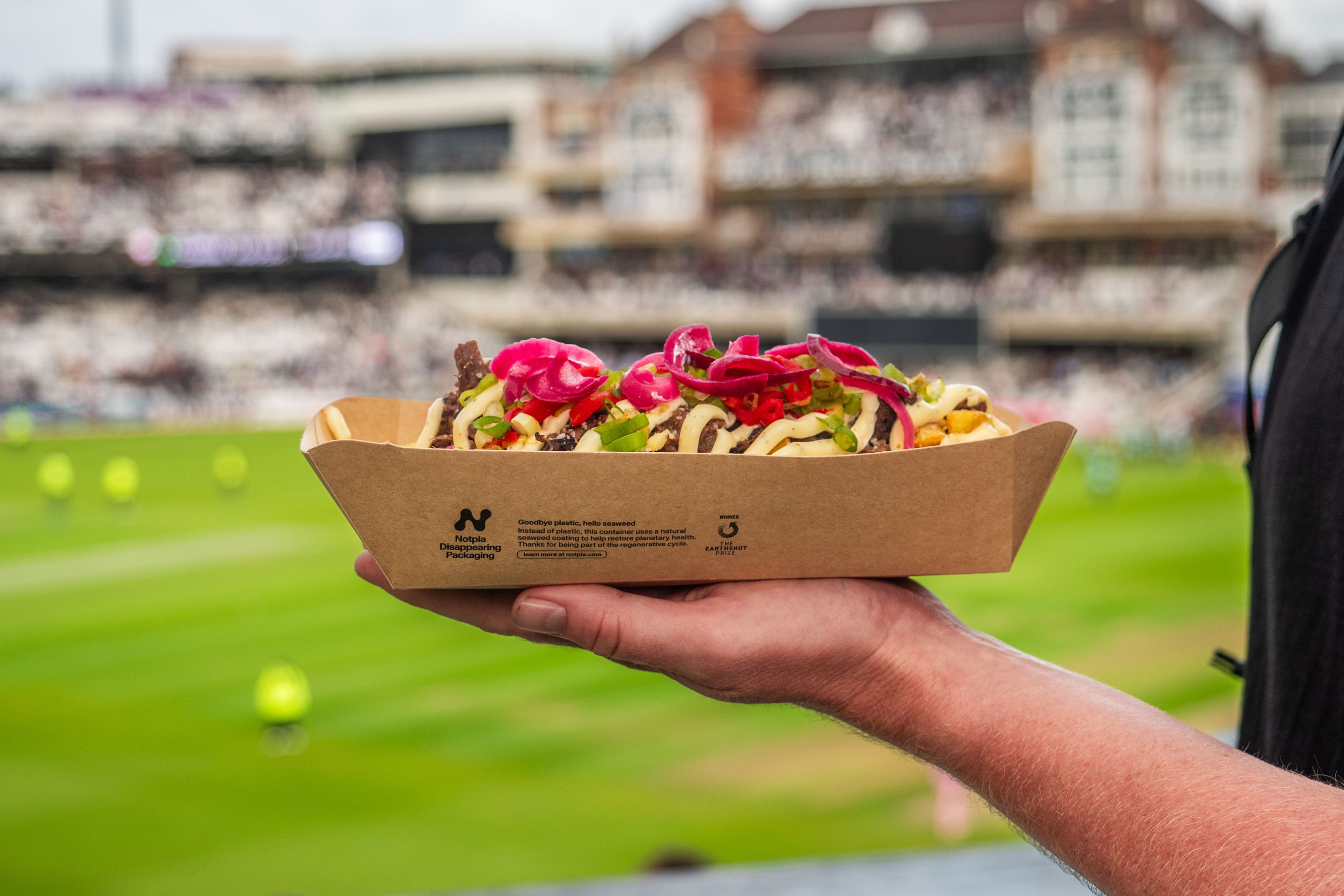 Notpla Stadium Range: building sustainable packaging into the big-game experience, at scale with Levy.
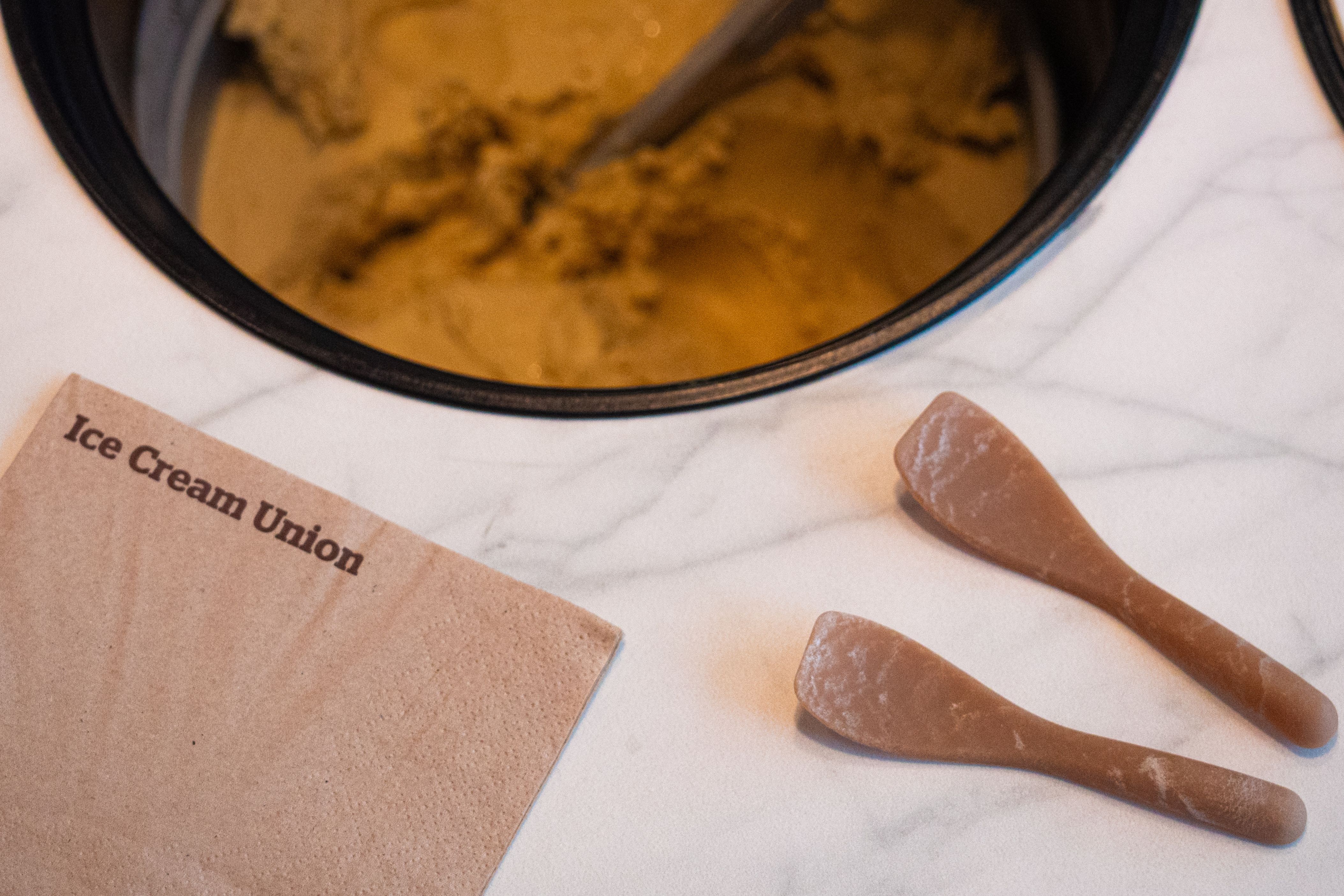 Why premium ice cream brands are switching to plastic-free spoons: Lessons from Ice Cream Union