
.jpg)
Every day, hundreds of people move through Arup’s canteen. Breakfast, lunch and coffee in between. Therefore, food needs to be prepared, served and picked up quickly.
Like most workplace catering environments, everything is designed to keep things moving. Packaging is part of that system. It holds the product, presents it on the shelf and, once used, disappears into day-to-day office life.
But that routine is starting to shift.
Across workplace catering, reducing single-use plastic is becoming part of day-to-day decision making. The challenge is doing that without disrupting how service already works.
At Arup, that shift became something more deliberate.
“There’s not a lot of silver bullet solutions in sustainability as a whole. But in terms of packaging, Notpla comes pretty damn close.” Annette Price, ESG Manager, The Good Eating Company
Arup had already been supporting The Earthshot Prize, working with ideas designed to tackle environmental challenges at scale. When Notpla was named a winner in 2022, the connection felt immediate.
“When we found out about Notpla winning the Earthshot prize, me and my catering manager were like, we absolutely have to get this product in here.” Leanne Yexley, Workplace Experience Manager, Arup
But the decision wasn’t just about bringing in something new. It needed to align with how the organisation already worked.
“We have a sustainability scorecard that’s given to us across all of our offices. 'No single-use plastics' was the one that was going to tick the excellence box.”
In that sense, the direction was already set. This was about finding something that could meet it in practice.
In a busy workplace canteen, packaging doesn’t just need to meet sustainability goals. It has to fit into a system that is already in motion.
“When Notpla introduced the sandwich packaging with a clear window, it was ticking all of the boxes.” Charlotte Arthur, Catering Manager, Arup
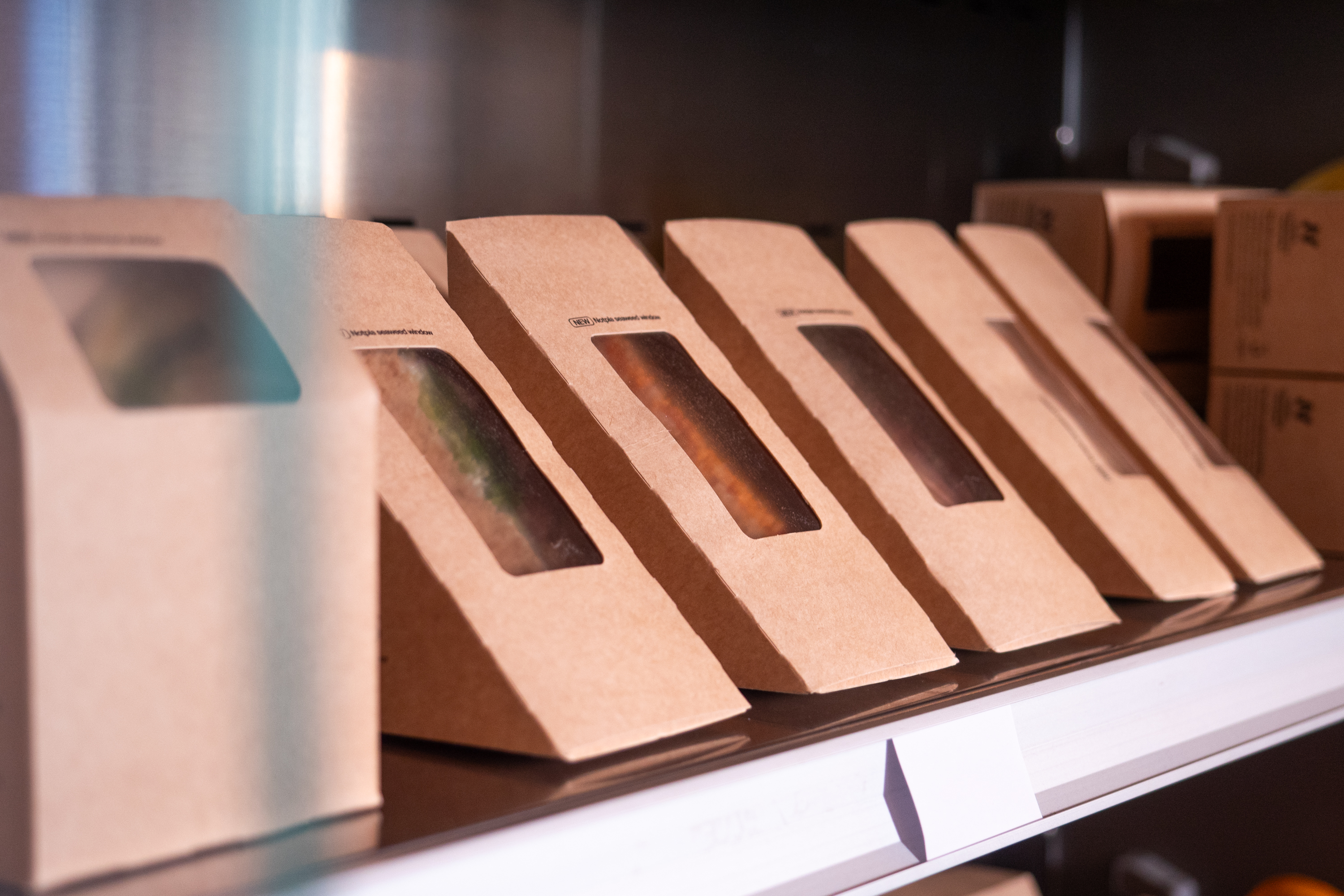
The change itself is small, but noticeable once you see it. A sandwich box with a transparent window made from seaweed instead of plastic.
“It was fully compostable, but also it looks very nice on our shelf.”
The sandwich is still visible. The experience doesn’t change. But the material does.
Most sandwich packaging is built in layers. Cardboard on the outside, plastic on the inside. In theory, it can be recycled. In practice, it depends on what people do next.
“With sandwich packaging, there is nothing on the market that is truly plastic-free, and where you don’t have to remove the window film from the cardboard for it to be properly recycled.” Annette Price, ESG Manager, The Good Eating Company
That step, removing the plastic layer, is where the system often breaks down.
“Consumer knowledge and awareness of that is rock bottom.”
The Notpla SeaView range approaches the problem differently. Instead of relying on behaviour, it simplifies the material itself.
“They’ve solved a problem that people didn’t realise existed in the first place.”
The whole pack can go into one compostable bin. No separating, no instructions, no uncertainty about what happens next.
Changes like this tend to be small in isolation, but they repeat.
“Since we’ve introduced the Notpla packaging, we have reduced our carbon by about 39%. So it was a great success.” Charlotte Arfeu, Catering Manager, Arup
In a workplace environment, that kind of repetition matters. The same decision, made hundreds of times a day, starts to add up.
What’s interesting here isn’t just the material, it’s how little else needs to change.
The packaging still works in the same way. It fits into the same shelves, the same service, the same pace of use. But the outcome is different, and that shift happens instantly.
A plastic-free window box designed for foodservice.
Explore Notpla’s sustainable food packaging range.
.jpg) The end of plastic versus paper: Why natural materials belong in modern manufacturing
The end of plastic versus paper: Why natural materials belong in modern manufacturing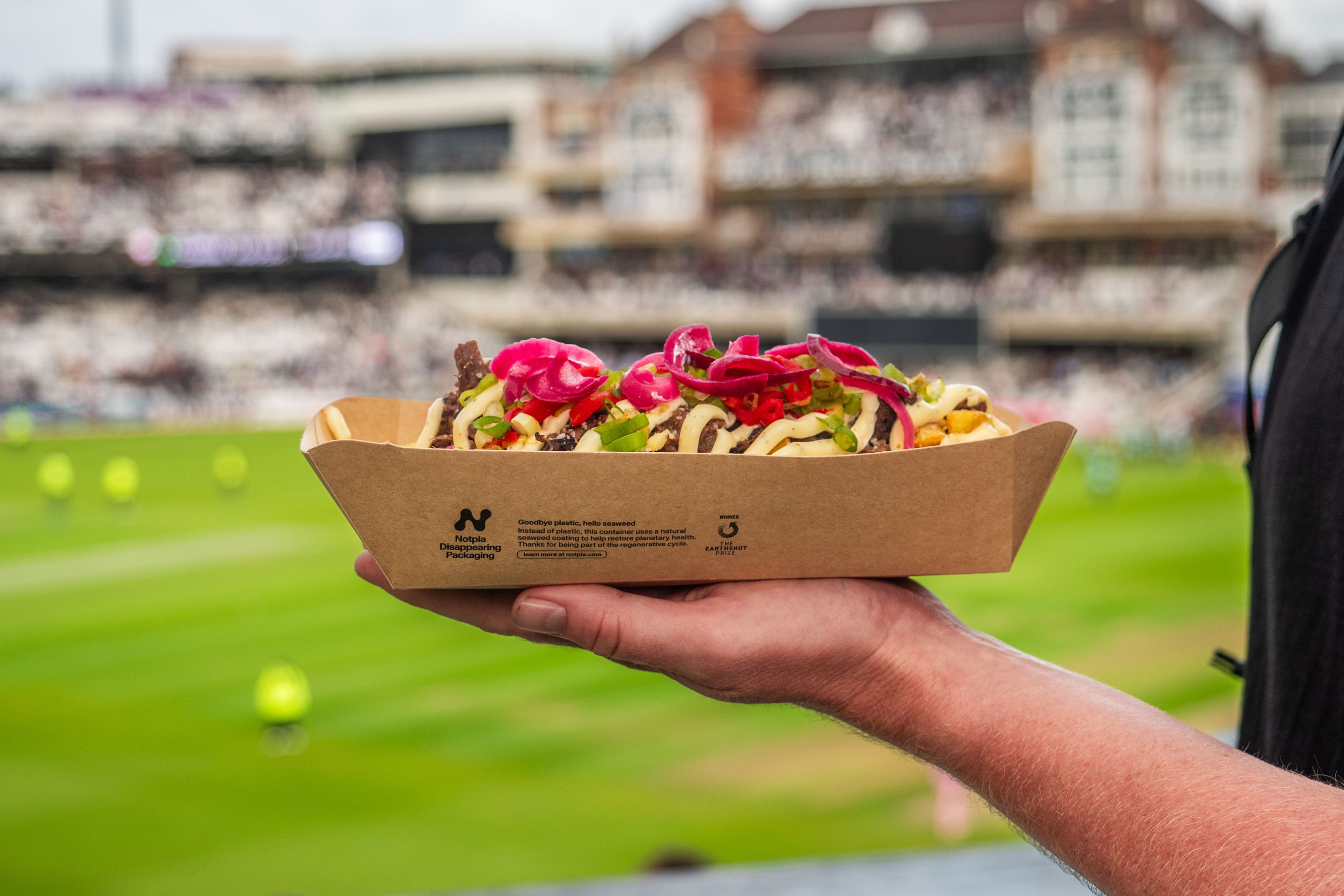 Notpla Stadium Range: building sustainable packaging into the big-game experience, at scale with Levy.
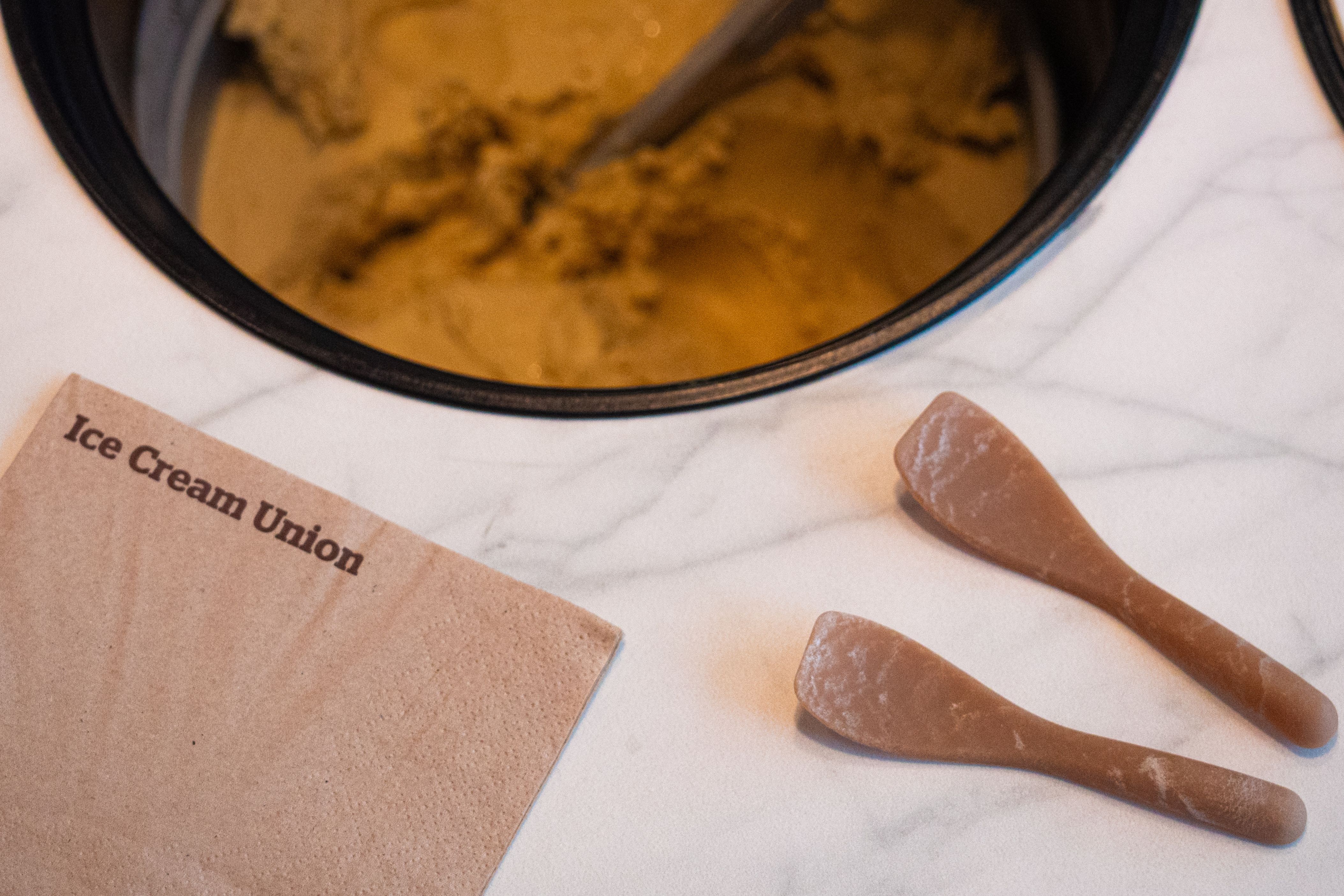 Why premium ice cream brands are switching to plastic-free spoons: Lessons from Ice Cream Union